
A Contemporary Performance in the Halprin Lineage
An artistic legacy is not simply something we preserve. It is something we continually bring to life. An evolution in artistic practice.
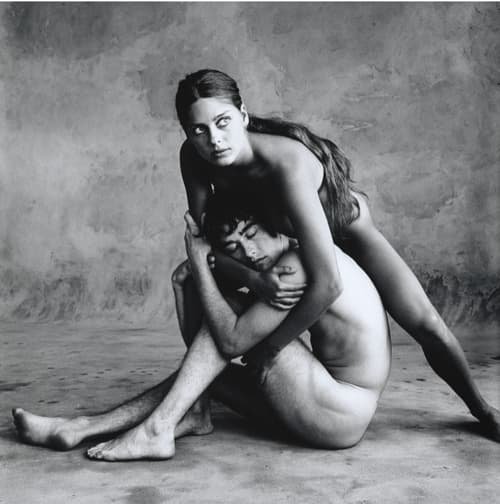
This January, Tamalpa Institute and the Halprin Legacy Lab present (Re)Source, a new performance at the San Francisco Museum of Modern Art (SFMOMA), co-directed by Daria Halprin and Ruthanna Hopper. Inspired by Anna Halprin’s groundbreaking artistic practice and the Irving Penn photographs of her work currently on view at the museum, (Re)Source brings the Halprin legacy into a contemporary artistic conversation.
The performance also honors the historic artistic collaboration between Anna Halprin and Bruce Conner, whose shared experimentation brought dance and visual art into a radical dialogue. In their 1975 performance at SFMOMA, Conner’s imagery was projected directly onto the dancers’ bodies, transforming the moving body into a site of visual expression and extending the possibilities of both performance and image. (Re)Source draws inspiration from this remarkable convergence of artists and disciplines, honoring their collaborative spirit while opening new pathways for artistic exploration.
Informed by the artistic practices of Anna and Lawrence Halprin, (Re)Source carries their spirit of experimentation into the present, exploring the intersections of dance, visual art, embodied practice, and artistic process as an evolving field of creative inquiry. Rather than revisiting a singular historical performance, (Re)Source offers a contemporary reimagining, an unfolding exploration of the ideas, scores, and sensibilities that continue to animate the Halprin work.
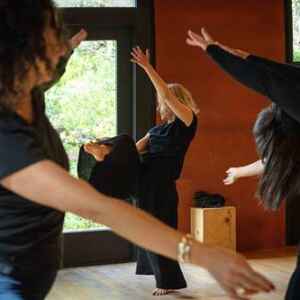
Performed by an ensemble of artists trained at Tamalpa Institute, the work reflects an ongoing transmission across generations, where artistic inheritance becomes a source of experimentation, discovery, and new creation.
The performance coincides with the newly republished Anna Halprin: Collected Writings, edited by Ruthanna Hopper with Jeff Khonsary of New Documents and Alex Balgiu of Design Writing, further extending the reach of Anna Halprin’s ideas and artistic contributions.
The SFMOMA program also serves as a launching point for The Artist Within Us All: The Halprins and Their Circle of Influence, an exhibition curated by Ruthanna Hopper and Laura Whitcomb for the Further Triennial, presented by Minnesota Street Project in collaboration with Tamalpa Institute and the Halprin Legacy Lab. Extending the spirit of artistic exchange that animated Anna Halprin and Bruce Conner’s collaboration, the exhibition explores the expansive networks of artists, composers, filmmakers, poets, and designers who shaped and were shaped by the Halprin world.
As part of the SFMOMA program, art historian and curator Laura Whitcomb will offer a talk exploring the artistic relationship between Anna Halprin and Bruce Conner, illuminating their shared experimentation and the enduring significance of their interdisciplinary collaboration.
Together, these projects affirm the Halprin legacy as a living artistic practice, one that continues to evolve through the artists, communities, and creative possibilities it inspires.
Join us at SFMOMA for an afternoon of performance, historical reflection, and artistic dialogue, celebrating the continuing life and evolution of the Halprin work.
Presented by SFMOMA with Tamalpa Institute and the Halprin Legacy Lab.
For more information click here.

Member
 Tamalpa InstituteEvent Member
Tamalpa Institute, founded in 1978 by dance and expressive arts therapy pioneers Anna Halprin and Daria Halprin, is a non-profit organization internationally recognized for its ground breaking training programs & workshops in a unique approach to movement based expressive arts education and therapy.
We offer expressive arts training programs and workshops for healing, education, and social transformation. Our innovative work has been brought into classrooms, businesses, hospitals, mental health care settings, hospices, prisons, and disadvantaged communities, among others. The Tamalpa Life/Art Process®, which combines movement, dance, drawing, and writing, has influenced the fields of dance, environmental design, theater, movement therapy, and art-based psychology. Our approach is based on the theory that people’s own life experiences are the most meaningful sources for artistic expression and social change.
Tamalpa has worked with over 10,000 people from more than 50 countries, including students, educators, therapists, artists, social workers, and health care providers. Today our movement-based, expressive-arts training programs are ranked among the best in the world. And our public and social engagement programs serve diverse communities from all walks of life, including children, elders, and virtually everyone in between.
Tamalpa Institute’s programs are recognized by the International Somatic Movement Education and Therapy Association (ISMETA) and the International Expressive Arts Therapy Association (IEATA).
Leave A Comment
You must be logged in to post a comment.